By Glenn Harcourt
In memoriam Ken Moselle
The following is a review of Waller R. Newell’s book: Tyranny and Revolution: Rousseau to Heidegger (Cambridge: Cambridge University Press, 2022).
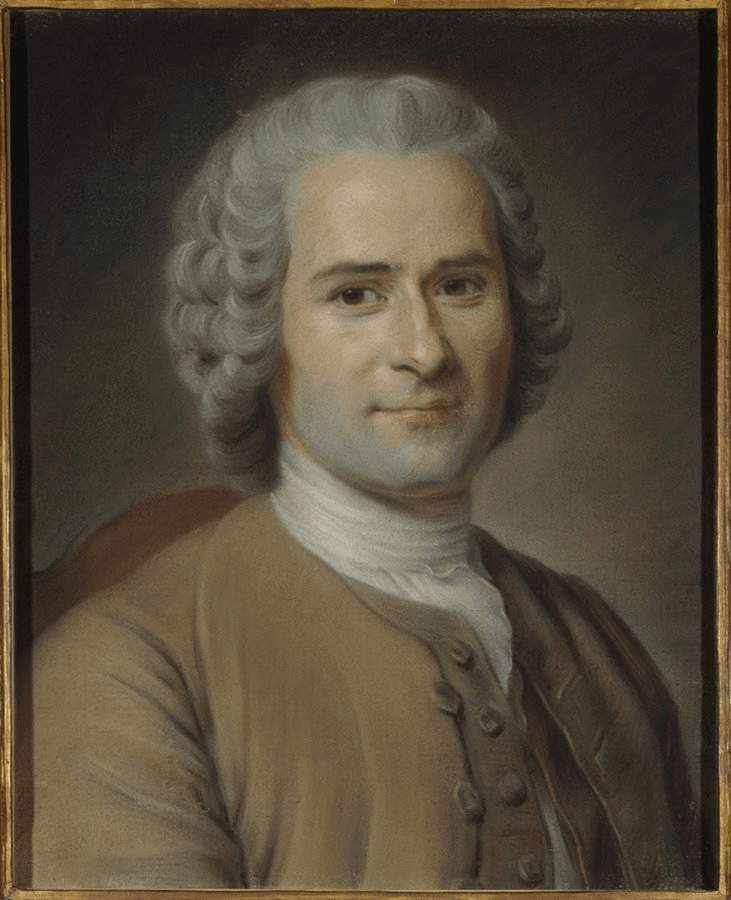
Above: Jean-Jacques Rousseau by Maurice-Quentin de La Tour c.1763, Geneva Museum of Art and History.

Waller Newell’s new book, Tyranny and Revolution introduces us to a long philosophical discussion initiated in eighteenth-century France by Jean-Jacques Rousseau, but for the most part played out in Germany across the nineteenth and into the twentieth centuries. The author quite successfully draws out the intertextual particularities of this discussion, essentially providing a critical history of what he describes as “The Philosophy of Freedom.” The subject matter is complex; but Newell’s writing is lucid and eminently comprehensible, so long as you commit to doing the work. This is not a book to skim, but a careful reading can be most rewarding.1
The conversation laid out by the author carries both positive and negative implications. In Newell’s own words, The Philosophy of Freedom “was an attempt to return to a classical conception of human existence rooted in our communal connectedness with one another, a synthesis of the ancient Greek polis with the individual liberty of the modern age.”2 At the same time, it “attempted to restore [this] full sense of cultural, aesthetic and civic satisfaction” in response to “the vulgarity, narrowness and philistinism of Enlightenment individualism and [of] the state as nothing more than a heartless utilitarian contract among producers and consumers of commodities.”3 Here, we can take Hobbes as the classic philosophical exemplar, and, in the cultural sphere, the cutting-edge developments of French nineteenth-century modernism. Newell’s cohort not surprisingly engages this aspect of the wider culture almost entirely in terms of German Romanticism.4
In some ways, this program was doomed from the start, but it produced some of the most elegant and powerful system building in all of philosophy, particularly in the writing of Kant and Hegel. At the same time, these two figures represent an important pivot point in the overall argument, as embodied in Hegel’s assertion that the development of human freedom and its mediation by the state is completely conditioned by its unfolding within History. Kant’s definition of freedom, by contrast, is an ideal achievable only from a radically “disinterested” stance essentially outside History.5 In any case, henceforth, History will govern all.

Newell begins his own narrative with the figure of the “Enlightenment” disruptor Jean-Jacques Rousseau (1712-1778),6 an extraordinarily important figure in both French philosophy and politics. Sporting a “flamboyant lilac-colored fur-edged caftan,”7 and often known in the French salon society he frequented simply as Jean-Jacques, he fashioned for himself a performative public persona. His thought can seem likewise unsystematic since his mind moved with ease across a multiplicity of subjects and a disparate collection of styles.8 He needs to be approached via a constant tacking back-and-forth between various texts in an attempt to grasp his often changing and frequently evanescent meaning.
Rousseau is probably best known today for his book The Social Contract (1762), often introduced to American students in the context of its importance to the Founding Fathers.9 This is not surprising, since the contract that Rousseau proposes intends “to preserve as much of our . . . natural freedom as possible by setting up institutions that prevent any citizen from ruling despotically” and “forestalls to the degree possible” the deadening effects of the never-ending bourgeois competition for wealth and status, the war of each against all.10 Unfortunately, Rousseau saw this contract as a necessarily second-best scenario in a world that had already been irremediably compromised in respect to his rather extravagant and strangely Edenic notion of Mankind’s original State of Nature, where each person lived alone(!) and self-sufficient, pursuing a life of absolute freedom and perfect happiness.11
Indeed, even as a party to such a contract, Rousseau holds out the possibility that, through one’s own effort, supplemented by education, one may finally attain the exalted status of the aesthetically engaged “solitary dreamer,” experiencing the pure flux of “nature as origination” (here Newell quotes Rousseau directly) “without taking the trouble to think.” 12 Needless to say, this stance completely upends the position almost universally adopted by both classical and medieval philosophy which stresses an intellectual ascent toward some transcendent principle of universal wholeness, whether that might be the True and the Good, or the eternal and unmoving God. This act of radical personal liberation is arguably Rousseau’s greatest intellectual achievement. It both points the way forward and alerts us to trouble on the horizon.
In Pico Della Mirandola’s “Oration on the Dignity of Man” (1496), one of the great Renaissance defenses of our place in the universe, God speaks to Adam in Eden, extolling humanity’s middle position between the bestial and the divine, and the power of our free will to move our souls in either direction.13 Then, in one of his most notable formulations, He reminds Adam that “We have set thee at the world’s center that thou mayest from thence more easily observe whatever is in the world.”14 God is able to do this (place Adam as a synecdoche for all of humankind “in the center” of the universe) because Pico believes that the universe actually has a center, embodied in the idea of a “cosmos” [kosmos in ancient Greek, meaning most simply something that is orderly or harmonious],15 a creation perfect and unchanging within which we are free to move and act, and which comprises a stage on which those actions can be evaluated and morally adjudicated.
Nothing could be farther from Rousseau’s truth, his belief in the pure flux of “nature as origination,” which amounts to a radical de-centering of the human situation that will have enduring consequences for all the following philosophers that Newell considers (Kant, Hegel, Marx, Nietzsche, and Heidegger), not least in their attempts to find a solid ground on which to construct a basis for adjudicating the morality of individual choices and actions. Indeed, the default solution for all these thinkers to a greater or a lesser extent recapitulates Rousseau in the decision to abandon any appeal to a transcendental or “cosmic” structure into which humanity can be neatly fitted (as it were, “at the center”) in favor of the individual’s immersion in the on-rushing stream of history (where there is no center but only eternal “origination”).
Eventually, this strategy becomes necessary precisely because the model of the cosmos is itself overturned by empirical evidence. Rather than being an eternally unchanging structure capable of balancing rest and regular motion (perhaps exemplified most familiarly in the Ptolemaic model of the heavens with Earth at its center), the intrinsically harmonious “music of the spheres” is replaced by what Newell describes as “the physics of matter in motion,”16 and which he elaborates as “a happenstantial flux bereft of purpose.”17
The strictly philosophical upshot of all of this was the necessity of somehow balancing the demands of maximally free individuals against the integration of those same individuals into a governmental structure that is (at least) minimally able to regulate their behavior so as to comprise a stable and functioning community, without invoking any transcendental principle. In actual fact, problems in this regard became apparent very shortly in Rousseau’s France, where his ideas were enthusiastically embraced as affirming not only the liberating spirit of the French Revolution, but also as pointing toward both the Jacobin Terror and the eventual reaction that paved the way for the rise of Napoleon, and his imperial desire to spread a refurbished and moderately liberal Girondist regime across Europe by war and conquest.18 And indeed, as Newell argues, increasingly grotesque and violent recapitulations of this passage from liberating revolution to autocratic tyranny become standard operating procedure in European history as his philosophers continue to struggle with this recalcitrant problem.
“The final form that Spirit assumes is the modern state (for Hegel, ideally a constitutional monarchy): This is the end of history.”19 The end of history . . . and the final apotheosis of that “happenstantial flux bereft of purpose.” This end “embodies the unity of Subject (each of us individually) and Substance (whatever is ‘out there’ in the world) by uniting the subjective, passionate side of Spirit20 with its substantive completion in civic life. The modern state embodies Spirit as a dynamic whole made up of living parts, the reconciliation of the Is and the Ought. It is not, as the early moderns had argued, a social contract between separate individuals and a government umpire [another jab at the Enlightenment]. Instead, law and morality mediate between the individual and the state, and thereby create our freedom.”21 (my italics). It does not, however, guarantee the final achievement of eternal rest and peace as realized in a harmonious cosmos, it does not create a Utopia or a Golden Age existing outside of time. In the world to come, at the end of history, there will still be pain, hunger, crime, coercion and death, as ghostly revenants of the historical process itself.22 Newell very skillfully untangles the conclusion to Hegel’s extraordinary exercise in metaphysical system-construction in his extended section, “The Erotic Ascent of Hegel’s Phenomenology.” 23

There are, however, a number of issues that permeate, and to an extent vitiate this entire on-going discussion throughout its historical unfolding. The first is that ever-elusive State of Nature, the way things were, as it were, at that initial point of origination, in the time before the dawn of history. Since all these philosophic systems are prima facie secular, if not explicitly materialistic, the account provided by the Genesis story is ruled out of from the start. Unfortunately, lacking any actual, concrete evidence, thinkers like Rousseau were forced to construct their own mythologies, fictions that may not seem the best foundation on which to erect a system with hypothetical real world consequences. 24 The most successful attempt in this regard was probably that produced by Marx’ collaborator Frederick Engels, whose The Origin of the Family, Private Property, and the State grounds a dialectical argument on the then-contemporary work of the American anthropologist Lewis H. Morgan.25
Then, there is the problem of classical antiquity. It is not surprising that this philosophical cohort turned to the world of classical antiquity to find models for education, the proper mode of civic engagement, and, most importantly, even of doing philosophy, since, throughout the period under consideration, a rigorous classical education (including both Greek and Latin) was virtually universal in those secondary schools designed to funnel students to university. Although Rousseau’s education was largely informal and self-directed, he was, by far, the outlier in this group. Kant, Hegel, and Heidegger were university professors, Nietzsche had a degree in classical philology, and even Marx filed a thesis at the University of Jena, entitled The Difference Between the Democritean and Epicurean Philosophy of Nature (his Roman emphasis here is a bit eccentric). So they were not at all ill-equipped to engage with the thought of classical Greece and Rome. The initial problem was not one of familiarity, but one of scale. Estimates vary, and fluctuate according to time frame, but it is probably safe to assume that during the 5th and 4th centuries BCE, the number of fully vested Athenian citizens ranged between 30,000 and 60,000 – these were the adult men able to cast votes in the Assembly. There were also women, children, metics (non-citizen foreigners) and upwards of 100, 000 slaves. For comparison: Hegel took up a teaching position in Berlin in 1818, which he would hold until his death in 1831. In 1820, the population of Prussia, in which Berlin and its university were situated, was about 10.3 million. This disparity might suggest that civic solutions worked out, for example, by Plato and his rather small circle of students were not necessarily appropriate to a population roughly 80 times as large. Now, of course, the problem has become essentially metastatic: with a current world population of over 8 billion increasingly linked into a single mass (tech is an important driver here, but not the only one) with a grossly heterogeneous but semipermeable array of cultures.
At least as serious was the question of which antiquity ought to provide models for emulation, either personally or civically. The general go-to was a much idealized version of the government of Periclean Athens, promulgated by the classical philosophers themselves. Needless to say, History tells a very different story, and the problem of translating an ideal model (Periclean Athens) into another ideal model (say Hegel’s constitutional monarchy), which was then expected to have real-world applicability was a virtually impossible task, even for thinkers as subtle as Kant and Hegel. And, of course, the tendency toward violence implicit in Rousseau’s conception of absolute freedom was in no way theoretical, as the French Revolution pointedly demonstrated. Likewise, it also demonstrated, as Newell’s thesis attests, that, lacking a kosmos to provide a universalizing still-point, the poles of maximal freedom and necessary civil structure came to exist in an uneasy dialogic relationship, generally resolved, following a frenzied, even violent upsurge of freedom, in favor of an increasingly autocratic government, where an abstract freedom might only be realized as an aspect of civic conformity and obedience.
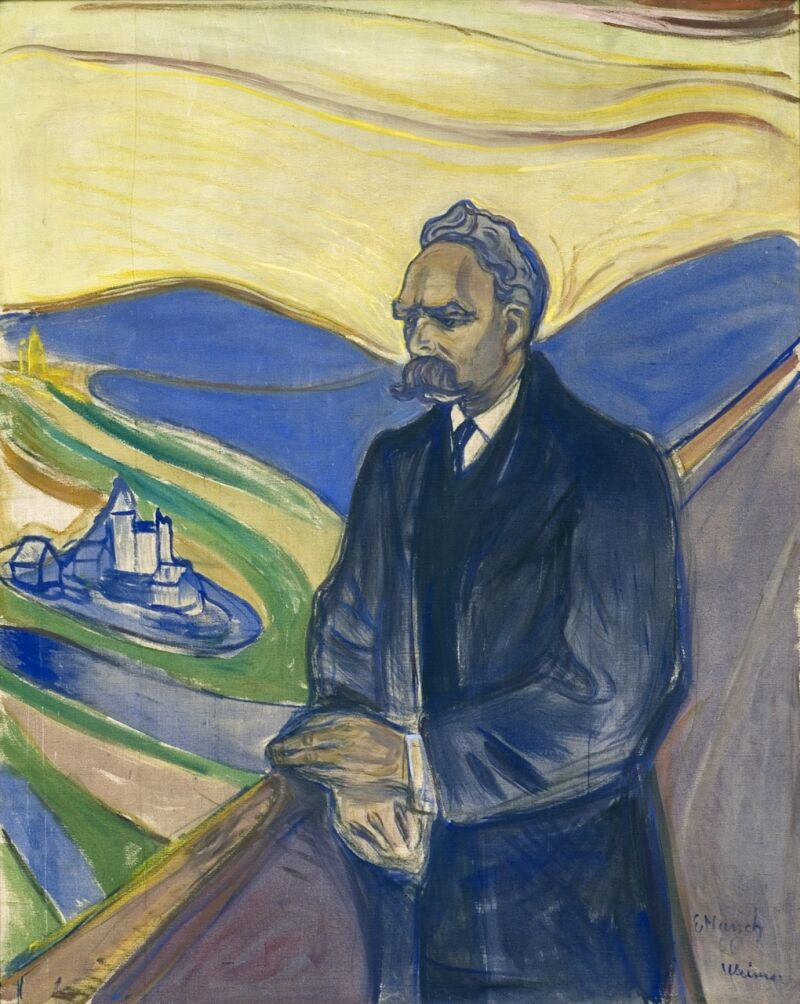
Marx, Nietzsche, and Heidegger took different tacks at this point. Marx’s resolute materialism removed all the metaphysical problems, but his promise of absolute freedom and personal fulfillment as an adjunct of universal communism was left to others to fulfill, and its disastrous fate is written across history almost since the moment that Lenin arrived at the Finland Station. Nevertheless, his analysis of history as a series of dialectically-motivated class conflicts has not lost its descriptive or its analytic power, and Marxist historians and critics still have a valuable place in contemporary discussions across a wide swath of the intellectual landscape.
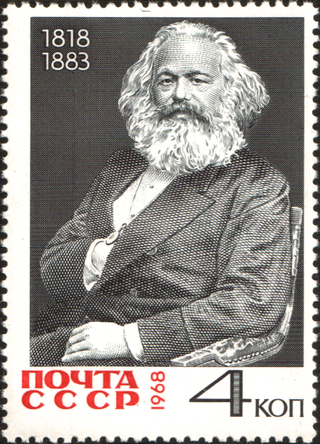
Nietzsche: the self-proclaimed Antichrist, the disciple of a chthonic and ecstatic Dionysus, the philosopher who proclaimed that “God is Dead,”26 and the man of a thousand literary faces, is in some ways the odd man out in this whole group, as well as being the only one whose academic background is directly concerned with classical culture. He is also the one whose name, especially in connection with the concepts of the Übermensch and the Will to Power, seems most adrift on the tides of popular culture.27
He recapitulates Newell’s entire problem most succinctly in classical terms, as the clash between a broadly fifth-century rationalism overseen by Apollo and an archaic, anarchic, and potentially bloody ekstasis overseen by Dionysus,28 whose acolyte he decidedly is.29 Furthermore, he sees his mission as opening a door to that select few individuals capable of understanding and grasping the “heavens-storming mastery of life symbolized by the Will to Power”30 that will set them apart from other men, in a position beyond Good and Evil with all values transvaluated. Needless to say, this is a resolutely anti-egalitarian view, and one which despises what Nietzsche sees as the “herd mentality” of nineteenth century modernity. Nietzsche’s fame, not to say notoriety has endured since his death in 1900, and his celebrity within the very culture that he so derided easily surpasses that of Rousseau. His legacy is complex and definitely not all of a piece. Newell gives a good summary of what we might describe as the good31 and not-so-good take-aways from Nietzsche’s philosophy as a whole. The biggest negative, of course, is Nietzsche’s relationship to fascism and, more particularly, to National Socialism. Although Nietzsche did not personally espouse antisemitism, and cannot be held directly responsible for any use the Nazis might have made of his philosophy long after his death, there is a case of sorts to be answered here. The world-transformation via the Will to Power for which Nietzsche longed, was in essence a blind, apocalyptic leap into the future, bereft of any ethical constraints that might oblige the Übermensch, for example, to repudiate the Nazi’s Final Solution, or, for that matter, any other genocidal solutions to political problems.32 That lack of ethical constraint would make living in a world where, as Zarathustra tells us, “Nothing is true” and “Everything is permitted,” in my estimation both terrifying and dangerous for everyone.
This brings Newell at last to Heidegger, arguably the greatest philosophical thinker of the 20th century, certainly the one whose work has been most hotly contested. Since Heidegger was in fact a member of the Nazi Party who lectured and taught in support of National Socialism, if only for a short time, and who never repudiated either his own membership in the Party or the Holocaust in which he might easily be seen to have been complicit,33 the fact of his antisemitism should be beyond dispute and past argument. Nevertheless, the importance of these facts to our evaluation of his philosophy as a whole has remained a matter of bitter contention since the end of World War II. This contest has re-erupted most recently in regard to the publication (2014) of the so-called Black Notebooks, in which Heidegger left a private record of his own intellectual life and opinions from the 1930s until the 1970s. Indeed, the Black Notebooks seem to have spawned an academic cottage industry that has once again rehashed all the possible positions that one might take with respect to the “unfogivable” and life-long intertwining of Heidegger’s philosophy and his antisemitism.34 On this issue, Newell himself strives to achieve a middle view, balancing a belief in the fundamental value of Heidegger’s philosophical work against a principled condemnation of his actual association with National Socialism and the continuing, if occasional, anti-Semitic passages in his private work.
Although almost all of the anti-Semitic passages in the Black Notebooks reprise time-worn tropes of wide and long-standing use, there is one that seems peculiarly relevant to Heidegger’s ontology in its suggestion that the image of the rootless Jew alludes to “[that] kind of humanity that . . . can take over the uprooting of all beings from Being as its world-historical ‘task’.”35 In any case, whatever the impact of this one particular quote might be for our evaluation of Heidegger’s philosophy as a whole, it points to a serious problem that becomes manifest at the climax of Newell’s narrative of the unfolding of his “Philosophy of Freedom.” And it is a problem that involves both Heidegger and Nietzsche: the fate of the individual beings whose freedom has been at issue throughout Newell’s narrative.
When Rousseau devised his theory of the social contract as a “second best” response to his own rather eccentric vision of a world of perfect freedom where every individual being lived alone pursuing a life of simple self-sufficiency, he set the parameters for the entire subsequent narrative: how to balance maximal personal freedom against the minimum of government control necessary to preserve social order and protect the freedom of the individual. But for Nietzsche and Heidegger, and despite their continued evocation of the ideal Greek polis that had been a primary driver for Newell’s entire cohort,36 these parameters no longer carried any force. Both Nietzsche’s appeal to the Will to Power, and Heidegger’s analysis of the Being of being striving to attain its Destiny, placed actual beings at a steep discount. Rather, these philosophers waited for an impersonal or “transpersonal” force to effect an apocalyptic and world-transforming revolution, so radical in its scope that its outcome could not be foreseen, and which was frankly millenarian and eschatological in form.37 Within this matrix, the fate of individual beings, even as they suffer the horrendous agony associated with world-historical events like the Holocaust, or the Bombings of Dresden and Hiroshima, are as nothing in the face of that which is to come. As Newell trenchantly notes, this marks the collapse of the Philosophy of Freedom, the repudiation of the idea that one might construct a system capable of articulating Absolute Knowledge (perhaps nowhere so assiduously pursued as in the work of Hegel), and the subsequent fragmentation of philosophical inquiry into various schools pursuing much more restricted inquiries.38
In sum, Newell has given us an excellent analysis of a very important strain in western philosophy, both intellectually rigorous and very carefully laid out, in my estimation an important and useful piece of work. He also leaves us with a warning about the emergence of a “draconian polarity” between the idea of “populism” and that of a “global [technological] elite,” yielding a volatile political situation whose final configuration is as yet unclear (the book was published in 2022 – perhaps things have achieved a little clarity since then) but whose potential to unleash waves of spreading violence and authoritarianism is unmistakable.39
Let me end with two observations. First, the war against modernity and technology, waged so fiercely by both Nietzsche and Heidegger, is long lost. The world in which we have to live and understand and act now is, one might say apocalyptically unlike the world in which these philosophers lived, and we must think from the perspective that it now allows us. Second, the search for a secular “still point,” like that in which Pico’s God places Adam in the Garden of Eden, and which can serve as a ground on which to build a transpersonal system of ethics, has remained elusive. Continuing that search in the post-modern world must remain a top priority. But it might be wise as well to remember a quote from an interview that Heidegger gave in 1966: Perhaps “Only a God can save us now.”40
Glenn Harcourt is a widely published critic based in California who writes about the history of art and visual culture. His 2017 book, The Artist, The Censor, and The Nude: A Tale of Morality and Appropriation, takes a rigorous, culturally measured, and historical approach to examining the art and politics of “The Nude” across diverse cultural contexts, including the censorship of canonical Western art books in Iran. Many of Harcourt’s short form essays and reviews are available at Artillery Magazine and X-TRA Contemporary Quarterly.
1. Newell has a Ph.D. in Political Science from Yale University and now teaches Political Science, Philosophy, and Humanities at Carleton College. He was the co-founder of Carleton’s College of Humanities, Canada’s only four-year baccalaureate in The Great Books (what the English simply call Greats). This suggests a “conservative” turn of mind, something I do not intend to be seen as reflecting any necessary judgment. In any case, he also provides a bibliographic essay to accompany each chapter, so that you can put his argument into a contemporary academic context and make your own judgments.
2. “Modernity” is a concept rather truncated in Newell’s recounting of the philosophies in question, and, in my opinion, necessarily so. However, that in itself is a philosophical and historical problem that deserves a much richer discussion, one that I can only defer to a later date.
3. Newell, 3.
4. Ibid., 40-52. Likewise, the Enlightenment comprised a much more complex phenomenon than English empirical philosophy. See, for example, the magisterial two-volume work by Peter Gay, building on the foundational scholarship of Ernst Cassirer and others.
5. Newell, 89.
6. Although Rousseau moved and “performed” in Enlightenment circles, he is, on his own account, better understood as a post-Enlightenment thinker, a relentless opponent of the “bourgeois” Enlightenment that in fact supported him. In today’s terms, he was perhaps the world’s first “public intellectual.”
7. Newell, 7. Shades of Oscar Wilde! This may seem a trivial detail, but it represents an enduring aspect of Rousseau’s assault on the bourgeois world as well as virtually every such subsequent assault: it is not enough to take a transgressive stance vis-à-vis the world you despise; you must be seen as assuming such a stance. Transgression must be realized as action or performance in order to be effective.
8. He wrote about Man’s State of Nature (via some rather extraordinary comments on imaginary anthropology) and its evolution into the classical polis of ancient Greece; He described a quasi-ideal structure for contemporary society that supposedly balanced maximal freedom against a minimally invasive societal structure; He wrote a novel describing an ideal education; perhaps the most excoriating set of Confessions since Augustine; an essay on the futility on the contemporary arts and sciences, and a wonderful miscellany describing the life of a solitary walker.
9. I have regularly taught it in this context to classes of middle-schoolers. His essay On the Origin of Inequality and his novel, Emile: or On Education were also of interest to the Founders, whose wide-ranging reading habits also betrayed a keen interest in Hobbes and the other English Empiricists.
10. Newell, 12 et sqq. The idea of the eternal struggle of each against all, the bellum omnes contra omnes, is perhaps most closely associated with Hobbes.
11. Ibid, 22. There, the Social Contract is described as “an institutional simulacrum of our original natural condition.” Unfortunately, Rousseau’s State of Nature is, by definition, not a community, as well as flying in the face of even fictional plausibility.
12. Newell, 34-35; and see the entire section 32-36. Key to Newell’s argument here, and an illuminating read in its own right, is Rousseau’s final work, Reveries of a Solitary Walker, begun in 1776 and completed the following year, shortly before his death in 1778. See Jean-Jacques Rousseau, Reveries of a Solitary Walker, 1782 (London: Penguin, 1974/2004).
13. The influence of Plato on Pico’s formulation should be self-evident.
14. Pico della Mirandola, “Oration on the Dignity of Man,” in The Renaissance Philosophy of Man ed. Ernst Cassirer et al. (Chicago, University of Chicago Press, 1948/1975), 225.
15. The coinage is usually referred to Pythagoras (6th century BCE), hence its general association with number, music, and harmony.
16 A hyperlink directs the reader to a discussion in The Stanford Encyclopedia of Philosophy.
17. Newell, 66, during his extensive and quite insightful discussion of Hegel. This transformation has its modern roots in the program of Baconian science and, in our context, is perhaps best identified with Newtonian mechanics. It is not, however, confined to physics properly so-called, but reverberates across science more generally, for example in a mature Darwinian theory of evolution seen as a template for a history of life on earth.
18. Simon Schama, Citizens: A Chronicle of the French Revolution (New York, 1989), 939-940, sv under Rousseau, Jean-Jacques. As even a glance at the index listing for Rousseau shows, his influence spread to both the elite Girondists and Jacobins, as well as the lower class sans-culottes; he influenced both Marat and Charlotte Corday, Robespierre and Benjamin Franklin. Even Marie-Antoinette seems to have perused his work. And this is not an exhaustive list.
19. Newell, 89, summarizing Hegel’s approach to his metaphysical climax.
20. Following Platonic usage, Newell describes this movement of Spirit as an “erotic ascent,” as is the ascent of Diotima’s ladder on Plato’s Symposium. See, also Ibid., 63 for a further unpacking of this term in its Platonic and Hegelian usage.
21. Loc. cit.
22. Loc. cit.
23. Ibid., 40-111.
24. See Matt. 7:27 for Jesus’ description of the spiritual house metaphorically “built on sand:” And the rain fell, and the floods came, and the winds blew and beat against that house, and it fell, and great was the fall of it.
Today, the notion of a State of Nature is itself essentially defunct, but the questions around becoming human and becoming civilized have become almost endlessly complex and are all vigorously contested. At the moment, they seem of little philosophical value, at least with respect to the problems canvassed in Newell’s book.
25. Frederick Engels, The Origin of the Family, Private Property, and the State (New York, International Publishers, 1842-1970.) Although Morgan’s work is cited throughout, in Ibid., 7-13, Engels provides the full historiography that guided his research, at least providing an attempt to root his discussion in the actual material processes of history, whatever the weaknesses that are now apparent in Morgan’s work.
26. See, for example, The Gay Science, 125, “God is dead. God remains dead. And we have killed him.” The “prehistory” of God’s death, however, was already nascent in the history of north European Protestantism; and in the twentieth century His death lived on as a pressing existential issue, for example, in the cinema of Ingmar Bergman. See the especially harrowing examination captured in the so-called Faith Trilogy: Through a Glass Darkly (1961), Winter Light (1963), and The Silence (1963). The theology of madness evoked in Through a Glass Darkly, is especially terrifying.
27. See, for example, the character of Ray Hicks in Karel Reisz’ 1978 film Who’ll Stop the Rain, based on Robert Stone’s 1974 novel Dog Soldiers. The character of Hicks is in turn based on the Beat Generation writer and icon Neal Cassady, who himself had a keen interest in Nietzsche’s philosophy. On a less elevated plane, I have seen memes featuring both Superman and his arch-adversary Lex Luthor recast as Übermenschen; as well as Über-Nietzsche in the guise of both Superman and Luthor – clearly there’s a bit of cultural confusion here.
28. For the “classic” evocation, see Eurpides’ Bacchae.
29. In literary terms we might imagine a set-to between the Archaic, chthonic, Dionysian Aeschylus and the Classical, rational, Apolline Sophocles. However, Nietzsche’s first book, The Birth of Tragedy Out of the Spirit of Music (1872) tells a somewhat different story. There, he argues in a quite beautiful and moving passage that all art derives from one of two well-springs of inspiration: dream or intoxication, each having its own special motivating power. Dream he associates with the peaceful rationality of Apollo, which inspires both sculpture and poetry. Intoxication, on the other hand, is associated with music, and especially the wild, dithyrambic ecstasy of the earliest choral hymns to Dionysus. It is the fusion of these two inspirational sources that yields the Greeks’ crowning artistic achievement: Attic tragedy.
30. Newell, 176.
31. Ibid., 136-137. Particularly heartening is the recent “rehabilitation” of The Birth of Tragedy, which was reviled on its initial publication, and retained its pariah status until rather recently.
32. Ibid., 183; 178-186 for the entire argument involving Nietzsche’s real or potential political positions.
33. Newell refers to Heidegger’s later silence on the Holocaust as reflective of “the ethical vacuum of his philosophy as a whole.” Ibid., 253. But see, immediately following, the explanation of this position by the Jewish religious philosopher Emil Fackenheim as a kind of “ontological blindness” required by a point-of-view narrowly focused on the titanic struggle of Being to achieve its Destiny.
34. Newell, who himself provides and extensive analysis of this problem, takes a dim view of these efforts, which he argues tend to consciously misconstrue earlier attempts at dealing with Heidegger’s antisemitism as “uniformly naïve and exculpatory.” Ibid., 323. And indeed, his expansive and wide-ranging bibliographic essay (318-328) seems to bear out this contention. Still, the publication of the Black Notebooks has generated some interesting work across a wide spectrum of positions. See Andrew J. Mitchell and Peter Trawny, eds., Heidegger’s Black Notebooks Responses To Anti-Semitism (New York: Columbia University Press, 2017).
35. See Gregory Fried, “The King Is Dead: Heidegger’s ‘Black Notebooks’.” Los Angeles Review of Books: September 13, 2014; the author has an interesting take on “the problem of Heidegger” as a whole, namely that, even while repudiating Heidegger’s particular answers, we should nevertheless always keep in mind the depth of his questioning what it means to actually be a being in the modern world, a world for which Heidegger himself had so little sympathy. See also the responses to Fried’s essay.
36. This ideal polis, whether Archaic or Classical in detail, was quite fictional; but it has been deeply embedded in western culture since at least the Renaissance, and so continued to exercise an enormous influence on philosophical thinking, at least within this tradition, as a supposed “real life” touchstone. Not surprisingly, this ideal held the least interest for Marx, whose rigorous historical materialism led in a quite different direction.
37. Newell, 238-243, 257 (citing some important observations of Emil Fackenheim), and n.9, above. As Newell notes, this tendency is already present as a prefigurative echo in Hegel. Needless to say, Marx presents the prospect of apocalyptic change from his own historical materialist perspective. For more on this general topic, see Karl Löwith, Meaning in History (Chicago: University of Chicago Press, 1949), a classic of twentieth-century historiography, from one of Heidegger’s early students.
38. This is all carefully unpacked and analyzed in Newell’s concluding chapter, Ibid., 263-297.
39. Ibid., 297.
40. Ibid., 243.
 The Nomadic Journal