
by James Buchanan
Hillary Sachs looks at it with disgust then empathy.
She considers calling Walt Sachs—her husband—but she believes he couldn’t handle it. It would hurt him, maybe even piss him off. And to what purpose? Their poor daughter needs comfort and love, not Walt’s inability to deal, is what Hillary Sachs also believes.
Chip—Hillary and Walt’s seventeen-year-old son—enters the bathroom part way. Stops. “Oh. Excuse me,” he says backing out the door. Hillary is in the upstairs bathroom. For such a large house, there’re only two bathrooms. Hillary hates her son’s name: Chip. Actually, it’s a nickname given to him by his father—Walt—meant to be ironic but for a kid who is a blond, muscular Academy sophomore who made the varsity lacrosse team as a freshman—benchwarmer but now a starter—with a husky voice, and preppy sartorial tastes, the nickname Chip is a cliché that’s a bit too on-the-nose.
Did he see it? Hillary asks herself. If he did, she knows he’ll hide out in his room. The door of which she hears shut firmly. Hillary closes her eyes, inhales then exhales. It’s dark out. She served dinner less than an hour ago—porkchops, roasted fingerling potatoes, green beans—and there it is, again. A thick puddle of vomit running the length of the bathtub. Hillary assumes it’s Walt’s hair—the only known sufferer of a modest amount of male pattern baldness in the house—clogging the drain.
Hillary Sachs is tired. She’d wanted to take a shower then lie in bed reading.
It had been a hard day.
Despite Hillary dropping numerous verbal hints for the past few weeks to Kit and Dick Dickerson, earlier that day as head of admissions at the Academy, she had denied the Dickersons’ daughter Iona a place in the freshman class at the Academy for next fall. Iona’s a sweet, sweet girl but she’s not academically gifted. She comes across as a halfhearted striver—eighth grade drama club, cross country, clarinet in the seventh and eighth grade orchestra, meditation club, Gender Sexual Alliance, and so on—but her frenetic extracurricular schedule didn’t make up for mediocre grades, middling Independent School Entrance Exam scores, and a tedious personal essay. There was no way Hillary could let Iona into the Academy. She’d started the rejection letter about five times before she asked one of her subordinates—the too fey young woman—to write it for her. Hillary, as an act of kindness, did ask her to include a line encouraging Iona to try in a year for the sophomore class. She hoped that maybe Iona could pull off an academic miracle in her freshman year at the public high school. Probably not. She also wondered if perhaps Iona’s grades were more an act of passive aggression against Kit than an indication of true academic potential. In that case, perhaps Iona could pull off the miracle of not letting her controlling mother affect her quite so much. A miracle of maturity, perhaps.
No matter what, Kit’s not going to be happy. Hillary knows that Kit will express her feelings quite clearly, probably in an email, and then quite obliquely through a pile of passive aggression.
Given the current state of mail delivery in the US, Hillary Sachs believes the rejection letter will take four days to travel from her office to the Dickerson’s postbox five miles away. Today is Tuesday. With luck, the letter won’t arrive at the Dickersons’ until next Monday. I’ll just have to avoid the subject with Kit over the weekend, Hillary thought. A challenge, but one I’ll have to figure out.
Hillary frowns at the vomit then winces at an intrusive memory that a week ago she’d spoken to Kit about Addie’s eating disorder.
“In her bedroom?” Kit had asked.
Hillary questions the wisdom of sharing this information about Addie with Kit. She believes that Kit will concern-broadcast Addie’s situation throughout their tight little friend group.
“Yes,” Hillary had replied, “under the bed. In her closet. The drawers in her bureau.”
“Jars of vomit?”
“Yes.”
—a beat—
“That’s a lot of vomit.” Kit said.
“Well, yes,” Hillary felt a little panicked and a little judged by Kit, “Chip can’t stop masturbating to save his life, so going into either of their rooms is a hazard.”
“What are you going to do?”
“Stop going into their bedrooms.”
Kit frowned.
“She needs treatment,” Hillary continued, “but honestly, I’m terrified.”
“I can imagine.”
Hillary looks back down into the tub at the vomit. It looks like it might be bubbling. Hillary Sachs had been so scared when she found the jars of vomit in Addie’s room that she didn’t want to acknowledge the truth they spoke, that her daughter is killing herself in this intensely disturbing manner. Hillary didn’t count the jars. One is too many. Nor did she say anything to Addie. Hillary had no idea what to say. Hillary Sachs also didn’t know if she wanted to tell her husband. She and Walt had laughed when she told Walt about the stained towel beneath their son’s bed. Hillary, when she’d found cigarettes and a vape pen in Addie’s bookbag, didn’t tell Walt. Addie had pleaded with her, “Please don’t tell Dad.” Addie wanted Hillary to believe that fear drove her request but Hillary suspected it was more a worry of disappointing the man Addie only very recently stopped calling ‘daddy.’
Hillary just left the jars of vomit where they were, then she confided in Kit, a good friend, a loyal friend, the one of her few friends that would feel infinitely betrayed and angry if Hillary didn’t admit Iona into the Academy. Hillary didn’t know what Kit would do as punishment. Whatever Kit does, it’ll happen within their circle of female friends. Hillary imagines their collective reaction toward her: How could you? To one of our own! Worse, for a few weeks, until the next inter-friend-group dust up, they’ll speak to Hillary in quiet, consoling voices. Not one at a time but one after the other, their eyes, mouths, hands, bodies displaying emotional closeness of lifelong friendship, collectively inferring, I’m sorry but you know how Kit gets if you don’t stand by her. I love her but…
“Everything okay?” Walt Sachs asks from the bathroom door, his head cocked sort of like a chicken regarding a worm.
Hillary deflates a little. “No, come in.”
He doesn’t see the elongated pool of Addie’s vomit until Hillary points to it.
“What’s that?” Walt asks.
“Vomit.”
“I’m sorry. Are you sick? Want a covid test?”
“It’s Addie’s.”
“Oh. I hope it’s not covid.”
—a beat—
“Why in the tub?” Walt asks.
“She’s sending us a message,” Hillary says.
The lightbulb in Walt’s head surges to life. “Oh.” Walt raises his eyebrows which have the effect of lifting his lean though sagging-with-age facial features. “Maybe—”
“She needs help. She’s telling us she’s unhappy and she needs help. Not just therapy but real help. This is Addie telling us she’s not in control and she’s scared,” Hillary Sachs tells her husband.
Walt has always trusted his wife’s intuition. “Has this been going on long?”
Walt’s question infers a truth: his wife knows more about the struggles of their children than he does. He doesn’t like it, but he has no ego with regard to being a parent. He swims in his own lane but comes when called. Hillary has never met another man like him. He can be silly, straightlaced, sexual in a cerebrally sexy way she adores, but not a trace of competitive ego, except on a tennis court.
“It’s been going on long enough to scare her,” Hillary tells Walt.
“She’s scared me,” Walt says. He looks down at the vomit then back to his wife. “If she’s doing this, what else is there that we don’t know about?”
“A lot…nothing. I don’t know. Cutting, maybe?”
“Ah jeez,” Walt winces. “Our little girl.”
“Yeah. Not so little anymore.” There’s a slight barb to Hillary’s tone. Stop treating her like a child, is what Hillary’s words infer.
Walt looks back to the vomit. A tear glistens in his eye. In his thoughts, he just wants Hillary to deal with this, for Hillary to free him to simply love his daughter, not have to engage in something as difficult and painful and scary as this. Addie’s been so easy for Walt. She loves him and he adores her. Chip no longer says more than a few words to his father. Chip always seems acutely embarrassed and angry with Walt. The same way Walt felt and still feels toward his own father.
Hillary sees the tear. “I’m sorry, Walt.”
“Sorry?”
“I didn’t mean to imply anything.”
“That’s okay.” He wipes the tear away then looks at Hillary. Sorrow and the fear of a mother fills her eyes. Walt reaches out, pulls his wife toward his body, hugs her, kisses Hillary’s cheek. “I think we shouldn’t ignore this,” Walt tells his wife.
Hillary Sachs turns her head, her cheek rubbing against his, frowns at the vomit, “No, we can’t. She’s slowly killing herself.” She pats her husband’s bum, “Let’s go talk to her.”
“Both of us?”
“Yeah…well…” Hillary pauses for a moment. “Maybe we need to bring her in here. Let her confront it, tell us why or what it means, or just…I don’t know.”
Hillary feels a thought pass through Walt’s body. She steps from his grasp.
Walt looks at his wife then down to the vomit, frowns. “I suppose it’s good we caught it early.” Walt notices Hillary’s eyes drift from him. “I mean, this is bad but it could be worse. She could’ve tried hiding it from us.”
Guilt reddens her cheeks. The jars of vomit are a secret she’s kept from Walt. She’s not said a words of it to Addie, either. She monitors the appearance of new jars, new hiding places, waiting for Addie to throw them away. Hillary has heard Addie leave the house on trash day with a quick goodbye, too quick for Addie’s normal, leading Hillary to go lift the blue trash bags evaluating them for a telltale weight. She’s looked beneath Addie’s bed, the closet, her bureau, all the usual places. Never a missing jar. Always a new jar. Sometimes two. The longer the jars remain, the more that collect, the deeper Hillary Sachs worries for her daughter. Hillary wonders if she’s the one wishing the problem away, that common sense would come to Addie, that Addie would recognize the senselessness of this practice. The word ‘senseless’ catches in Hillary’s mind for a tic. Addie’s done nothing with these jars. They reside with her. She lives with them, sleeps knowing she’s surrounded by her own vomit, abandoned meals. It’s insane, Hillary thinks. Hillary realizes that she too has lived with this insane thing. She’s slept with it, Allowed it to occupy her home. She’s watched this insanity travel out the door with Addie to school, to friends, to clothes shopping, to sleepovers, to other people’s bathrooms and houses. Do they notice Addie leaving for the bathroom before a meal is done? Hillary Sachs wonders. This insanity has become her daughter and Hillary’s allowed it to live undisturbed for too long. The jars have made evident Addie’s disgusting, insane plea for help. This isn’t going to go away. Addie isn’t going to wake up in some moment of realization, of epiphany and realize how nuts all of this behavior is. Addie must recognize that this is pathetic behavior, Hillary thinks. Doesn’t she?
“Our daughter’s mind is disordered,” Hillary tells Walt. “She’s going to fight us.”
Walt frowns at the vomit. He reaches forward, opens the tub faucet, pulls the shower catch. Warm water pours onto the vomit like rain. At first, the water dimples the surprisingly viscous vomit. Streams of water work at it and the vomit begins to break and slide toward the drain. Steam also begins to carry the vomit’s odor. Hillary’s and Walt’s faces cringe.
“Why’d you do that?” Hillary asks.
“Couldn’t stand looking at it anymore.”
“This is better?” The warm water forms a slurry of vomit and splatters it on the sides of the tub. “Look, it’s sort of oily.”
Walt frowns at his wife, turns the water off. “I think we’re just avoiding talking with Addie. She must know by now that we know.”
Hillary’s phone vibrates against the granite sink countertop. The caller ID reads KitD. No, she thinks, we just mailed it. The phone continues to vibrate. Walt’s phone vibrates and lights up in his pocket. He pulls it out to look at the caller ID, careful not to inadvertently answer it. Hillary reads Trundle. “Is that Hugh?” she asks.
“Yeah, it is.”
“What could he want?”
“No clue.” Walt swipes the phone to reject the call.
Hillary views that as an aggressive act. Hugh will know he was ‘swiped.’ She prefers to let her calls go to voicemail. Hillary’s phone vibrates against granite. Hillary knows that Kit knows how many rings Hillary’s phone is set at. Kit knows everyone’s phone that way. Often, Kit will tell Hillary, “I tried to reach out to Stef”—or one of the other women in their friend group—“but her phone only rang five times. She’s ignoring me.”
“How do you know,” Hillary responds.
“It’s set to eight,” Kit will reply.
Hillary’s phone is set to ten.
“What’s that all about?” Walt asks.
“Kit?”
“Yeah. It’s just Kit. You look stricken.”
“We rejected Iona today.”
Walt’s eyebrows lift. His cheeks and jowls lift with them. “Moron.”
“Iona?”
“No. You. Just let her in for Christ’s sake. It’s just one well connected idiot but the next month of Kit”—Walt looks at the vomit, frowns—“who wants to deal with that?”
His eyes remain on the bubbling vomit. Addie drinks too much seltzer, Walt thinks. Whatever happened to my little girl. Addie loved him so much and he loves her so much. What could cause Addie this much pain, enough that she’d do this to herself, hurt herself like this. How many of his female students—usually the most promising, quiet, and his favorites—have left midterm for treatment? Where do they go?
Tears moisten Walt’s eyes. “Remember when Addie had you convinced that Chip is a transexual?”
“Yes,” Hillary exhales. “Fuck. That was funny.” She smiles at the memory then looks at Walt. “Or when she yelled at you, ‘You’re so dramatic it’s like living with Hitler!’”
“Yeah,” Walt laughs. “What does that even mean?”
Hillary frowns. “Don’t dissect it. It meant she loves you.”
“She loves you, too,” Walt tells his wife.
Hillary Sachs pauses for a thought, lets it pass. “She does, but not like you.” Hillary looks at Walt. “It’s okay, you know. You don’t have to protect me from Addie’s feelings like that. I know her, probably better than you, so you don’t need to buck me up or try to make it okay that she loves you more than she loves me right now.”
Hillary turns from Walt. She doesn’t know why she’s suddenly so upset. It’s come to her like a bitter taste in the mouth. Like a woman who feels a little shame, a little guilt for lying to her husband, for not telling him, Oh, by the way, there’s about twenty jars of vomit in the czarina’s room. Yes. Vomit. The girl who fooled me into believing our son wanted to be a girl and called you Hitler in a pique of hormonal disgust. She’s in pain, been in pain far longer than you know. I hid it and let her get worse hoping it would go away. And then I fucking told Kit Dickerson: our friend and the woman whose child I knew I could never let into the Academy. FUCK!
Hillary’s mind settles for a moment. She wonders if she said no to Iona purely to wield that power over Kit. She loves Kit, but, God, that woman sometimes…Yeah, maybe a little bit.
“Where did that come from?” Chip asks.
Walt and Hillary turn to the bathroom door. It’s opened a crack letting a shaft of light from the bathroom enter the darkened upstairs hallway. Chip’s eyes stare at the vomit but then move toward his father.
Walt frowns. “Go to bed Chip.”
Hillary rubs her eyes with her fingertips, squints to see Chip. He’s seventeen, will brutalize any other boy on the lacrosse field, but at home is still an anxious child.
“I had to pee,” Chip says.
“Well, go downstairs.” Hillary’s voice is curt.
Chips eyes send silent, plaintive vibes to his father.
Walt Sachs looks at Hillary. He loves his wife, but not this person that comes out every so often. She’s tired, stressed, afraid for Addie, and that she’s in pending conflict with Kit Dickerson, a nice but very busybody of a woman. Walt accepts this version of Hillary as part of the package he married. He is patient, tolerant of it, but has always tried to avoid these moments. They come. They go. But are difficult for Walt. They hurt. Walt imagines that he has his own moments where his wife sees him in a brown phase and tolerates that version of him to be with the other better versions.
“Chip,” Walt says, “why don’t you go downstairs. We’re okay in here. Discussing something about your sister.”
“Okay.” He turns.
Walt and Hillary hear him bounce downstairs.
Hillary wipes tiredness and tears from her eyes. “Gee, why would I ever believe he has gender dysphoria?”
Walt Sachs doesn’t know what his wife means by that. Is she saying that Chip’s nervous neediness is feminine or his boyish bouncing down the stairs is masculine? No mind. Walt frowns down at the vomit. Hillary’s eyes and lips do the same.
“I don’t like it when you do that,” Walt says.
Hillary’s eyes turn to Walt, “Do what?”
“Get angry.”
“Give it a rest, Walt.” Hillary hates it when Walt plays the paternal parent to her, like she’s his third child. The kids love him about one-quarter more than they love her and that’s because he wanted to be ‘Daddy’ far longer than she wanted to be ‘Mommy.’
“You’ve been rude,” Walt tells her.
“You’re being the soft parent again,” Hillary says.
“Soft? What the hell are you talking about?”
“Come on, Walt! You know what I mean. You make excuses while I make them accountable.”
“There’s your accountability,” Walt says pointing to the vomit.
“Jesus, Walt.”
“What?”
Hillary points at the vomit. “That’s not mine!” She pauses a beat. “Look at it, Walt. Parents have been holding their kids accountable for their behavior long before you or I came along. Whatever that is, it’s not me.”
“If that’s pain, where did it come from?”
“Not from me, Walt!”
Walt raises his hands, palms out, appealing for calm. “I’m just asking.”
“Specifically, or rhetorically?”
“Rhetorically, I guess.”
“I don’t know. She’s a sick young woman.” Hillary answers.
“How did you go from ‘scared’ and ‘a plea for help’ to ‘sick?’”
“How could I not? How could you not? Who leaves vomit in a tub? Do you not believe that she needs help?”
“She is getting help.”
Hillary looks away from Walt. Her eyes drift down toward the vomit. She bites her upper lip with her lower teeth. “Walt, do you mean Juliana?”
Juliana is Addie’s therapist. Iona’s therapist. Every girl’s therapist.
Walt nods.
Hillary frowns at the vomit. Her eyes return to her husband. “Walt, Juliana is great if you’re upset about not getting a part in the school musical.” The timbre of her voice rises. “But Addie needs real help, Walt, not upper middle class helicopter college admissions arms-race anxiety help. Real help from people who know what they’re doing.”
Walt’s hands fidget. Walt knows that his wife is right. “Okay. Any ideas?”
“No. We haven’t even confronted Addie yet.”
Walt’s lips move, he’s about to speak but he stops. Looks down at the vomit. Frowns. Hillary’s eyes follow his. She frowns at the vomit, too.
The fingers of one of Walt’s hands fidgets with his penis through his pants. “I have to pee,” he says.
Hillary exhales, though not at her husband. It’s more like stress exhaust. “I have to brush my teeth and do my face.”
“You know, you don’t have to do that for me,” Walt says to his wife.
“Brush my teeth?” Hillary smiles a little. She misses how she and Walt used to be playful with one another. Things between them used to be so much easier, but now their marriage feels like an endless negotiation.
Walt smiles back. “No. Your face, you don’t have to do your face for me.”
“I don’t do my face for you. I do it for the culture, a culture that says aging women are worth far less than just about anybody else. You, Walt, are the one person on this planet I don’t have to do my face for.”
“That was true—that expectation of women—but is it still? I mean, it’s the Academy. Haven’t we gotten past that?”
Hillary’s eyes narrow. “Yes. Still true. Especially at the Academy. Especially when you’re the first face parents get to see and know, the face that holds their child’s future in her…” Hillary begins to laugh.
Walt smiles, too. “You almost pulled that off,” he says.
When they first had come to the Academy—back when Chip and Addie were toddlers—they competed for most self-important statement of the day.
Hillary gives her husband a playful slap on his shoulder. “Stop it. You’re terrible. But yeah, it’s still true. I have to do my face.”
“And I must pee.”
“Then pee.”
“And brush my teeth,” Walt adds.
“Well, pee and then we’ll switch.”
Walt turns, unzips, a steady stream splashes in the toilet bowl. Hillary turns the sink water on, rinses her toothbrush, pastes it.
“Remember when you used to hold it while I peed?” Walt reminisces.
“Don’t be gross, Walt.” Neither were close to being virgins when they met, but the love that was quick to bubble up between them held an innocent curiosity. She wanted to know the geography of this man and he wanted to explore and discover hers as well.
Hillary turns her head to glance back at Walt. Despite the years, he stands before the toilet with his feet slightly spread, his shoulders broad. It’s the stance of all men urinating in a state of confidence.
Hillary dabs cleanser into the palm of one hand then pats her hands together. Hillary rubs the cleanser onto her face with her hands then rinses. When she finishes, reaching for her towel to dry her hands and face, she says, “Your turn at the sink.”
Hillary and Walt navigate around the other to switch places. As they do, they both give a side glance to the vomit, frown obliquely. Hillary pulls her pants down, sits. Walt runs the water, rinses his toothbrush, pastes it. A strong stream hits the toilet bowl. He brushes then spits.
Hillary finishes peeing. Wipes. Stands. Walt glances at his Apple watch, gives his wrist a shake for the watch face to light up. “It’s too late to get into it with Addie,” he says.
Hillary glances at the vomit. Frowns. “I’m tired, too. Exhausted.”
“Yeah.” Walt pulls Hillary into him, hugs her.
Hillary rests her cheek against Walt’s chest. “This is nice,” Hillary sighs.
“You don’t have a view of the vomit,” Walt says. He’s frowning at it. “Do you think Addie left it in the tub by accident?”
“No. She’s speaking to us.”
“Okay. Tomorrow then.”
“Yeah. We can be better parents tomorrow,” Hillary Sachs says to her husband Walt Sachs.
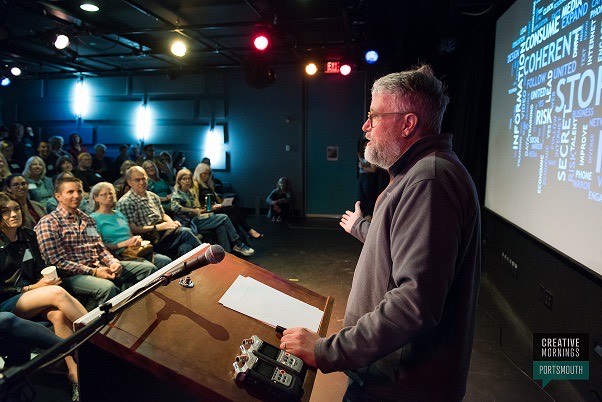
James Buchanan is a writer, developmental editor, writing coach and ghostwriter with nearly thirty years of professional experience. Many of his ghostwritten narrative nonfiction and nonfiction manuscripts have won awards.
Hillary and Walt Sachs is part of a larger novel titled Trundle, composed of a set of connected yet standalone stories that examine the angst and ennui of suburban domestic bourgeois life.
 The Nomadic Journal