Austrian artist Deborah Sengl, who published her art book “The Last Days of Mankind” with DoppelHouse this past December, discusses her recent exhibit, “Broken Soldiers.” In the following interview with Alois Kölbl, she explores her […]

Austrian artist Deborah Sengl, who published her art book “The Last Days of Mankind” with DoppelHouse this past December, discusses her recent exhibit, “Broken Soldiers.” In the following interview with Alois Kölbl, she explores her […]

By Monica Strauss
Around the turn of the century in Olmütz, a small town in the Czech Republic, (known as Olomouc in present day) a Jewish community flourished. With its impeccable examples of Gothic and Baroque architecture and connection to the Hapsburg Empire, it was known as the “Moravian Rome”. However, its young people were increasingly turning to cosmopolitan Vienna for intellectual stimulation. When the onset of World War I sent many of them home to Olmütz, they tried to maintain that high level of cultural exchange they had experienced in the Kaiserstadt.

By Peter Sichrovsky
I had no problems with anti-Semitism, neither in elementary school nor later in high school. The teachers stayed behind, often talking about their experiences during the war, some of them also open about being in the SS, but they left me alone. Life was far more difficult for my parents. … My mother did not want to talk to me about any of the former Wehrmacht officers who were my teachers now.

At the annual German Studies Association conference in September, the Austrian Cultural Forum featured Austrian author Erich Hackl’s Three Tearless Histories (DoppelHouse Press, 2017). The book is a collection of three personal histories about individuals affected by mid-century fascism, including the Austrian resistance fighter Gisela “Gisi” Tschofenig, who was killed in 1945, six days prior to the liberalization of the Schörgenhub work education camp where she was detained. In “Tschofenig: The Name Behind the Street,” Hackl recounts her improbable wedding in the Dachau concentration camp and attempts to resurrect her accomplishments amidst a family squabble that threatens to bury her forever.
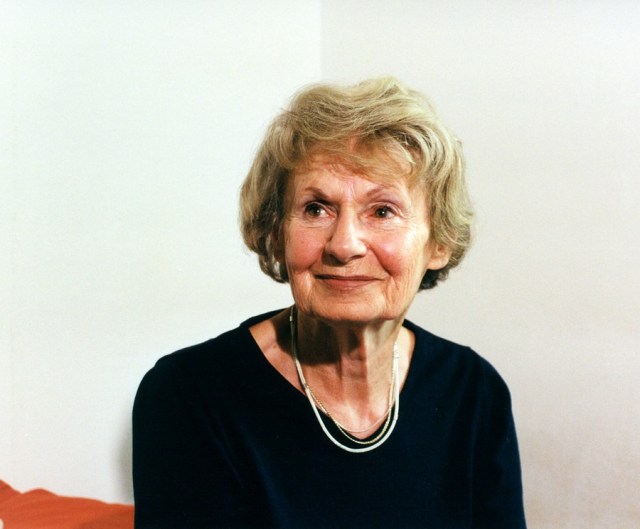
Based on interviews with award-winning filmmaker Helena Treštíková, Hitler, Stalin and I (DoppelHouse Press, 2018) is the oral history of Heda Margolius Kovály. In the book Heda recounts her experiences under fascist and communist oppression in 20th century Czechoslovakia. In the following interview, Treštíková and Kovály’s son and translator Ivan Margolius give more context to the book and its publication.
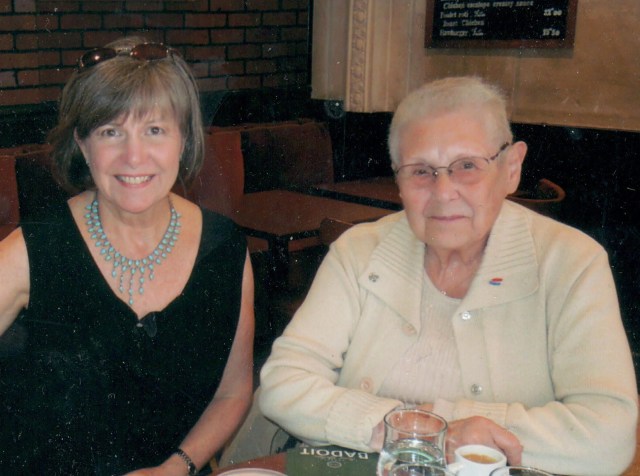
Frida Wattenberg: Remembering the Vél d’Hiv Raid of July 16–17, 1942
By Joanne D. Gilbert
As I sat on a hard bench reading a brochure in the crowded lobby of Le Mémorial de la Shoah, the Holocaust Museum in Paris, I sensed a change in the atmosphere and looked up. A sturdy, compact, elderly woman strode purposefully through the lobby. Her alert, intense, brown eyes, strong jaw line, and burst of closely cropped, snowy white hair belied her 88 years. The smiling crowd seemed to both part for and be drawn to her. She nodded back graciously, returning smiles, greetings, and hugs….

By Dietmar Dath
“We badgers,” said Georgescu, the green badger, sitting in the red sand in front of the Pielapiel Palace in the City of Sleep, “don’t much like violence. But when it happens, we’re ready.” The palace had not yet been inaugurated. Otherwise rough-spoken Gente such as Georgescu would have been shooed away from the great court. She was a thoroughly practical thinker, this badger, and was considering the strategic, tactical and operative prospects for a new clean- up operation against Homo sapiens.

From the archive of the Czech fictive genius Jára Cimrman, the “Loos Mobil” is a mobile phone system designed by Cimrman with Adolf Loos. This drawing comes to us from David Růžička.

Selected, with an introduction by Seph Rodney
The poems of Nina Pick selected for this issue of The Nomadic Journal demonstrate the powers Pick brings to the page: some poems are acts of startled witness, others confessional quests for comprehension, still others describe the movement of the speaker toward a romantic other…

By Gail Levin
Impulsively, on September 14, 2007, Sajitha rolled up some paintings and caught the train for Delhi, nearly fourteen hundred miles from home, where the language, Hindi, was unrelated to her own. She lacked enough money to live and was too proud to ask anyone for help….
 The Nomadic Journal