California artist Richard Clar developed a unique material language in the 1970s and 1980s that wedded sculpture and environmental art to technology and eventually to space science and astronautics. His works invoke high dimensionality, notably […]
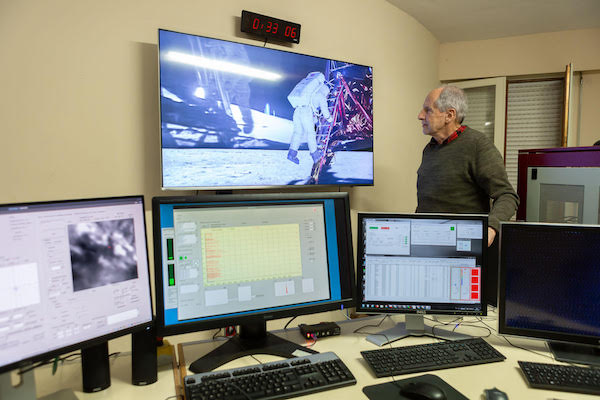
California artist Richard Clar developed a unique material language in the 1970s and 1980s that wedded sculpture and environmental art to technology and eventually to space science and astronautics. His works invoke high dimensionality, notably […]

By Kathleen Spies, Ph.D.
Created primarily from 1966 to 1972, Norman Daly’s The Civilization of Llhuros was a complex, multimedia art installation at the forefront of the shift to many postmodern and contemporary art practices that mark the era’s most significant contributions – from institutional critique and viewer engagement to the artist-as-anthropologist and the use of found objects as indexical evidence.

By Bansie Vasvani
Built, World investigates architecture and structural forms as articulations of injustice and longing. For some artists, freedom from oppression is expressed through their constructed worlds, while the impact of loss and displacement reverberate through some of the strongest works in the show.

By Seph Rodney
Around each bend in the Guggenheim rotunda, Alberto Burri’s works give off the scent of free-form experimentation, worked by both the elements and the will. He applied heat, flame, pressure to disparate mediums; he ripped and tore fabrics, allowed substances to dry, crack and fissure, all the time attentive to the process as well as to what could happen if something in the formula were changed. It seems counterintuitive that being so careful and particular, so watchful, would be tantamount to liberty for Burri. But his independence conspicuously reveals itself here.

By Andrew Patrizio
Artist Rona Lee has realized a remarkable series of works through constructions of her extended engagement with oceanographic research. In addition, Lee takes on the mantle of the ocean as a metaphor for the female body that can point us in new directions, above and beyond, or perhaps through, the notion of an art/science encounter and into a subtly feminist art discourse.

By Krystina Mierins
In March 2015, the Carnegie Museum of Art announced that Ingrid Schaffner will curate the next Carnegie International (CI), the second oldest survey of contemporary art in the world. Over the next three years, Schaffner will attempt the Herculean task of assessing and distilling contemporary art from around the globe. Of particular interest is the Hall of Sculpture, a room that has proven to be highly appealing to artists and curators, but is riddled with challenges.

By Joanna Grasso
I had just moved to the desert and was getting acclimated. The locals were a motley crew, including international writers, healers, tree whisperers, scroungers and bird watchers. At a local gathering, someone mentioned a site in Joshua Tree full of junk transformed.

